
 Search


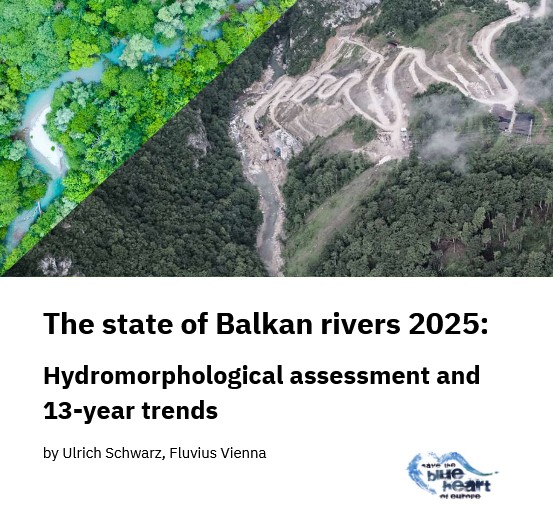
A wide-ranging new analysis of hydromorphological conditions in the Balkans shows a sharp and accelerating decline in the region’s famously unspoiled rivers. The State of Balkan Rivers 2025: Hydromorphological Assessment and 13-Year Trends report, led by Dr Ulrich Schwarz of Fluvius Vienna and commissioned by EuroNatur and Riverwatch under the Save the Blue Heart of Europe campaign, examined 83,824 km of rivers across 11 countries. The findings reveal that the share of rivers classified as nearly natural has fallen from 30% in 2012 to just 23% in 2025—equating to a loss of around 2,450 river kilometres—while the extent of heavily modified river sections has continued to grow.
A major new regional study has found that the Balkans’ rivers—among Europe’s last remaining wild waterways—are deteriorating at an alarming pace. The State of Balkan Rivers 2025: Hydromorphological Assessment and 13-Year Trends, report shows that the proportion of nearly natural river stretches has fallen from 30% in 2012 to just 23% in 2025, representing a loss of around 2,450 river kilometres. Commissioned by Riverwatch and EuroNatur as part of the Save the Blue Heart of Europe campaign and authored by Dr Ulrich Schwarz of Fluvius Vienna, the report assessed 83,824 km of rivers across 11 Balkan countries and found a growing extent of severely modified river sections.
The findings highlight stark national differences, with Albania experiencing the fastest river deterioration in the region. According to the report, the decline is largely driven by hydropower development and extensive river regulation, underscoring mounting pressure on ecosystems long considered some of Europe’s most pristine.
The project provided visual experience with a story map, and an interactive map.
More information and sources: Balkanenergynews and Riverwatch