
 Search


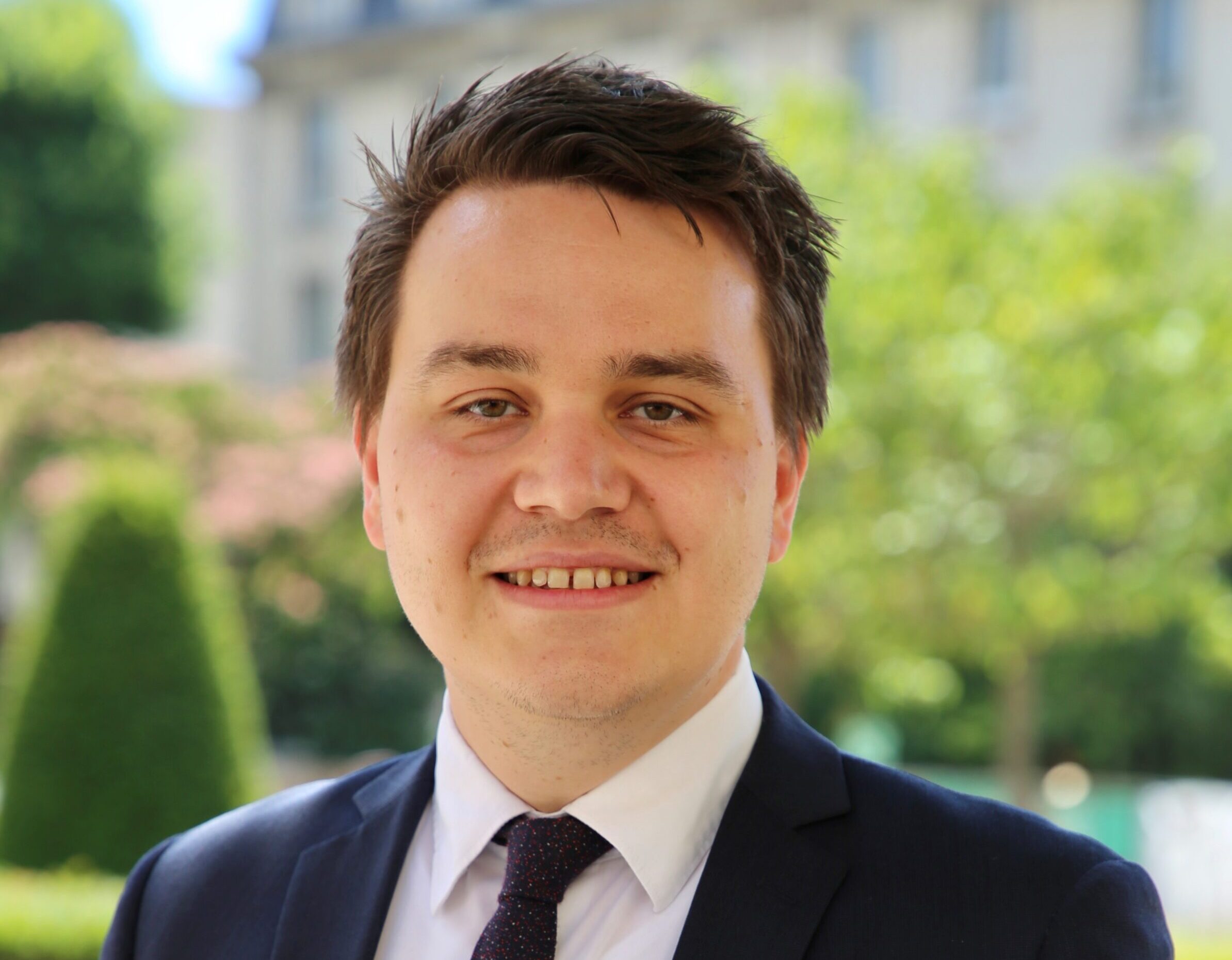
As Europe accelerates its efforts to harness artificial intelligence for scientific discovery, the European Commission is positioning AI as a strategic asset for research, competitiveness and technological sovereignty. To understand this agenda and the opportunities it creates for the Western Balkans, the Western Balkans Info Hub spoke with Axel Leisenberg, Head of Unit for Open Science and Digital Science Policy at the European Commission’s Directorate-General for Research and Innovation. In his role, Leisenberg oversees the development of policies and initiatives that shape Europe’s AI-enabled scientific landscape, including the recently launched European Strategy for AI in Science and the establishment of RAISE, the new Resource for AI Science in Europe. In this interview, he reflects on the Commission’s priorities, the balance between innovation and ethics, and the pathways for researchers and institutions in the Western Balkans to become integral contributors to Europe’s AI-driven scientific future.
The Western Balkans Info Hub has also prepared an overview of the state of AI across Western Balkan economies, which can be found here.
POLICY ANSWERS: What are the European Commission’s main priorities for AI in science?
Axel Leisenberg: The European Commission’s priority is clear: to make AI a foundational asset for European science. At the core of the initiative is RAISE (Resource for AI Science in Europe) a virtual institute that pools essential resources for AI-enabled science: compute power, data, talent and funding.
Through RAISE, the European Commission aims to provide dedicated access for researchers to AI Gigafactories, open up high-performance computing for research and support efforts to curate and integrate scientific datasets.
Another major priority is attracting and training talent, with support for Networks of Excellence and Doctoral Networks to train, retain and attract researchers from around the world.
Finally, the European Commission wants to ensure that AI transforms science in a way that advances Europe’s global competitiveness, technological sovereignty and scientific leadership, while addressing societal challenges, from health to climate, environment to disaster prediction.
POLICY ANSWERS: How is the European Commission balancing innovation in AI with ethical considerations in scientific research?
Axel Leisenberg: The European Commission is coupling strong support for innovation with a firm commitment to values: trustworthiness, integrity, responsibility.
First, the European strategy for AI in science builds on the EU’s overarching human-centric AI approach: AI in science must remain aligned with ethical, transparent and socially beneficial principles.
Second, the design process was inclusive and evidence-based: the European Commission relied on broad stakeholder consultations, scientific advice, reports from the Joint Research Centre (JRC), mutual learning exercises with Member States and Horizon Europe associated countries, ensuring that the strategy is grounded in real needs and scientific realities.
Third, by pooling resources through RAISE and coordinating access to shared infrastructure, the European Commission reduces duplication and fragmentation, which promote reproducibility, transparency and quality across projects.
Finally, the European Commission envisages long-term cooperation with Member States, Horizon Europe associated countries, stakeholders and the private sector, meaning the AI in science ecosystem will evolve under continuous scrutiny, dialogue and adaptation.
POLICY ANSWERS: What opportunities exist for researchers and institutions in the Western Balkans to collaborate with EU initiatives on AI in science?
Axel Leisenberg: There are concrete opportunities for Western Balkan researchers and institutions to engage with RAISE and the broader EU AI in science ecosystem.
First, through Horizon Europe, since RAISE is funded under it, Western Balkan researchers can join consortia for Networks of Excellence or Doctoral Networks or participate in collaborative projects on AI in science. Several topics are planned under the Horizon Europe work programme 2026-2027.
Second, they can gain access to compute resources and data infrastructures, even if their domestic capacity is limited. RAISE is designed to pool resources and make them available across Europe.
Third, institutions and researchers from Western Balkans can contribute their own expertise, data and scientific challenges, bringing regional perspectives into the EU-wide scientific agenda. This enhances diversity, promotes inclusive research and allows local problems to be addressed with cutting-edge AI tools.
Fourth, by engaging in talent networks and exchange programmes, institutions can help retain or re-integrate skilled scientists, building local capacity while remaining linked to the European research landscape.
POLICY ANSWERS: How can Western Balkan economies contribute to shaping European policy on AI in Science?
Axel Leisenberg: Western Balkan economies can become active partners of the European AI in science policy.
By participating in the new European Research Area (ERA) Action on AI in Science as associated countries, they have the possibility to contribute to define joint European priorities and strategic orientations. The fact that the ERA Action was launched alongside RAISE at the AI in Science summit 2025 in Copenhagen shows that the European Commission intends to build a genuinely European ecosystem. We are happy to see that North Macedonia and Bosnia and Herzegovina are already on board.
They can bring to the table regional research needs, data, domain expertise but also local scientific challenges (e.g. environmental issues, public health needs, economic development).
Moreover, by contributing via cooperation, joint projects or networks, they help shaping standards, guidelines and best practices. Over time, this can lead to more balanced European governance of AI in science, reflective of Western Balkans realities.
In short: the Western Balkans can and should be full partners in building Europe’s AI-driven scientific future.
POLICY ANSWERS: We thank for the availability for this interview and for highlighting the concrete opportunities for the region!